




Subscribe to ConsentBit Newsletter
GDPR Cookie Consent Popups Explained: Features, Compliance & Implementation Guide

20
April
2026
20
April
2026
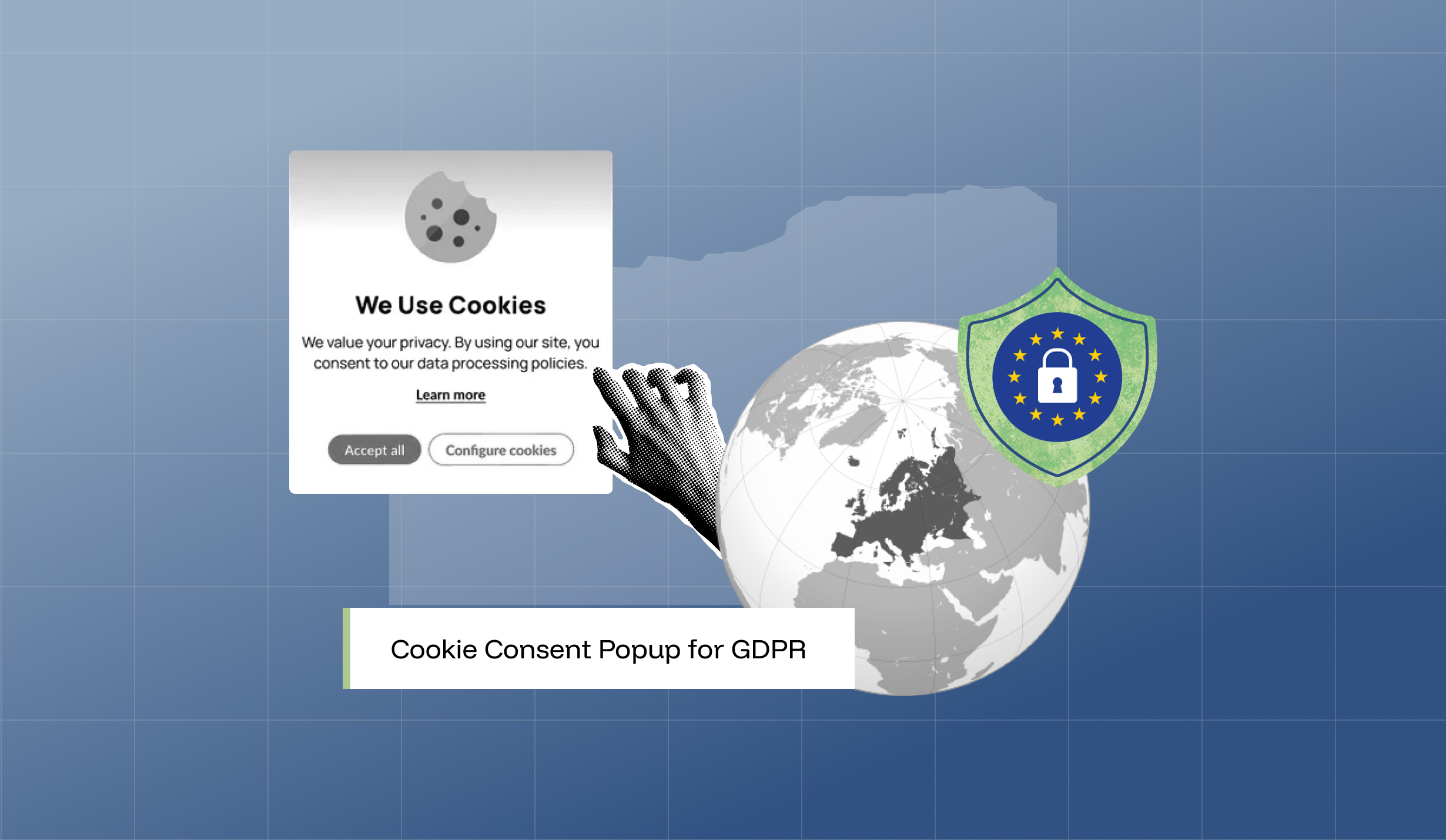
If you run a website today, especially one that attracts visitors from the European Union, you’ve likely encountered the need for a cookie consent popup. While it may seem like a small banner, it plays a critical role in ensuring your website complies with privacy laws and builds trust with users.
But not all cookie consent popups are created equal. A poorly implemented banner can expose your business to legal risks, while a well-designed one can enhance transparency, improve user experience, and strengthen your brand’s credibility.
This guide explains everything you need to know about GDPR cookie consent popups, what they are, how they work, essential features, legal expectations, and how to implement them effectively.
What is a Cookie Consent Popup for GDPR?
Before diving into features or implementation strategies, it’s important to clearly understand what a cookie consent popup actually is and why it exists in the first place.
A cookie consent popup is a user interface element, typically a banner, modal, or slide-in, that informs visitors about the use of cookies on a website and requests their permission before collecting or storing certain types of data.
Under the General Data Protection Regulation (GDPR) and the ePrivacy Directive (often called the “Cookie Law”), websites must:
- Obtain prior consent before placing non-essential cookies (such as analytics or marketing trackers)
- Provide clear, transparent information about what data is collected and why
- Offer users real control over their preferences
- Maintain proof of consent
This means that simply notifying users is not enough. Consent must be:
- Explicit (clear affirmative action)
- Informed (users understand what they agree to)
- Freely given (no forced acceptance)
- Granular (users can choose categories)
In practice, this transforms the cookie banner from a passive notice into an active compliance tool. It also requires coordination between legal, design, and development teams to ensure the implementation meets both regulatory and usability standards. A well-structured popup becomes part of your broader data governance strategy rather than a standalone feature.
Types of Cookies Covered Under GDPR
Now that the concept is clear, the next step is understanding the different types of cookies involved, since GDPR requirements vary depending on their purpose.
1. Strictly Necessary Cookies
These are essential for website functionality (e.g., login sessions, shopping carts). These do not require consent but must still be disclosed. They form the backbone of core user interactions and cannot be disabled without breaking site functionality. However, transparency is still required, meaning they should be clearly listed in your cookie policy.
2. Analytics Cookies
Used to track user behavior (e.g., page visits, time on site). These require consent under GDPR. They help businesses understand performance and optimize user journeys, but they also involve tracking identifiable patterns. Because of this, explicit opt-in is mandatory before activation.
3. Marketing Cookies
Used for advertising, retargeting, and personalization. These require explicit consent. These cookies often involve third-party integrations and cross-site tracking, making them more sensitive from a privacy perspective. Improper handling of these cookies is one of the most common sources of compliance violations.
4. Preference Cookies
Store user settings such as language or region. Consent may be required depending on implementation. While they enhance user experience, they still collect behavioral data in some contexts. Proper classification and explanation are essential to avoid misrepresentation.
Clearly categorizing cookies not only improves compliance but also helps users make informed decisions. It creates a structured consent experience that aligns with GDPR expectations and enhances transparency.
Key Features of a GDPR-Compliant Cookie Consent Popup
Once you understand cookie types, the next logical step is identifying what makes a consent popup truly compliant and effective in real-world scenarios.
To ensure both compliance and usability, your cookie consent solution should include the following advanced capabilities:
Granular Consent Management
Allow users to toggle different categories of cookies instead of offering a single “Accept All” option. This aligns with GDPR’s requirement for specific consent and empowers users with real choice. It also improves trust by demonstrating that your platform respects user autonomy.
Prior Script Blocking
Prevent non-essential scripts (like analytics or ad trackers) from loading until consent is obtained. This is a technical requirement often overlooked, but it is critical for compliance. Without it, your site may still violate GDPR even if a consent banner is present.
Clear Consent UI Design
Buttons like “Accept,” “Reject,” and “Customize” should be equally visible—no dark patterns. The design should encourage informed decisions rather than manipulate users into accepting cookies. Accessibility and clarity play a major role here.
Consent Logging & Audit Trail
Maintain secure, timestamped records of user consent for regulatory audits. This ensures you can demonstrate compliance if challenged by authorities. It also adds a layer of accountability to your data practices.
Easy Consent Withdrawal
Provide a persistent option for users to modify their preferences anytime. This is a core GDPR right and must be as easy as giving consent. A visible and accessible mechanism improves compliance and user experience.
Geo-Targeting Capabilities
Display consent banners only where legally required, improving usability for global audiences. This avoids unnecessary friction for users outside regulated regions. It also helps optimize performance and reduce clutter.
Multi-language & Localization
Adapt messaging based on user region and language for better clarity. This ensures users fully understand what they are consenting to. Localization also enhances engagement and reduces bounce rates.
Together, these features ensure that your cookie consent popup is not only legally compliant but also user-friendly and scalable. They transform compliance into a seamless part of the user journey.
Why Cookie Consent Popups Are Critically Important
At this point, you might ask, beyond compliance, why do cookie consent popups really matter for your business?
Legal Compliance and Risk Mitigation
GDPR violations can result in heavy fines (up to €20 million or 4% of global turnover). A compliant consent mechanism significantly reduces this risk. It also prepares your business for audits and evolving regulations.
User Trust & Transparency
Modern users are increasingly aware of data privacy. Transparent consent mechanisms show that your brand respects user rights. This trust can directly influence conversion rates and long-term loyalty.
Ethical Data Collection
Consent-based tracking ensures that the data you collect is legitimate and permission-based. This improves data quality and aligns with ethical business practices. It also reduces dependency on questionable tracking methods.
Improved Brand Reputation
Privacy-first businesses stand out in competitive markets. Demonstrating compliance signals professionalism and responsibility. This can be a strong differentiator in industries where trust is critical.
Alignment with Global Privacy Laws
GDPR compliance creates a strong foundation for other regulations worldwide. It reduces the effort required to adapt to new legal frameworks. This future-proofs your business against regulatory changes.
Overall, cookie consent popups are not just about avoiding penalties—they are about building a sustainable, trust-driven digital presence.
Best Practices for Designing an Effective Cookie Consent Popup
So, how can you ensure your cookie consent popup is not just compliant, but also effective and user-friendly? The following are some best practices for designing an optimal consent experience:
Keep It Simple and Clear
Avoid legal jargon and use plain, user-friendly language. Clarity improves user understanding and increases meaningful consent rates. Simplicity also enhances accessibility.
Offer Equal Choice
Ensure “Reject” is as easy as “Accept.” Avoid manipulative design tactics. Ethical design improves compliance and strengthens credibility.
Use Layered Notices
Provide a short summary with access to detailed information. This balances usability with transparency. It allows users to explore deeper if needed.
Optimize for Mobile
Ensure the popup is responsive and unobtrusive. Mobile users should have the same level of control without usability issues. Poor mobile design can significantly impact engagement.
Test and Optimize
Continuously analyze user interaction with your consent banner. Use insights to improve design and performance. Optimization ensures long-term effectiveness.
Applying these best practices ensures your popup is both compliant and user-centric. It becomes a natural part of your website rather than a disruptive element.
Common Compliance Mistakes to Avoid
Even with the best intentions, many websites still fall short of compliance, so what are the most common mistakes you should watch out for?
- Pre-selected consent options
- Lack of a reject button
- Loading tracking cookies before consent
- Hiding consent settings in policies
- Using vague or misleading language
- No record of user consent
These mistakes often stem from misunderstanding GDPR requirements or relying on outdated implementations. They can lead to regulatory scrutiny and damage user trust. Regular audits and updates are essential to avoid these pitfalls.
How ConsentBit Helps You Stay Compliant
Given the complexity and ongoing evolution of privacy regulations, managing cookie consent manually can quickly become overwhelming—this is where a dedicated solution becomes invaluable.
Implementing a GDPR-compliant cookie consent system manually can be complex, especially as regulations evolve. This is where ConsentBit provides a structured and scalable solution.
Automated Compliance Management
ConsentBit keeps your website aligned with GDPR and other regulations through continuous updates. This reduces the burden on internal teams. It ensures ongoing compliance without constant manual intervention.
Advanced Consent Controls
It enables precise configuration of consent categories and user preferences. This ensures alignment with legal requirements and user expectations. Flexibility is key for different business models.
Seamless Integration
Easily integrates with CMS platforms, analytics tools, and marketing systems. This minimizes disruption during implementation. It also ensures consistent data flow across systems.
Real-Time Consent Tracking
Tracks, stores, and manages consent data securely. This supports audit readiness and compliance verification. It also enhances transparency in data handling.
Customizable User Experience
Design banners that match your brand identity. This ensures consistency across your website. A well-designed banner improves user engagement.
Performance Optimization
Blocks unnecessary scripts until consent is given, improving load speed. This enhances both compliance and technical performance. Faster websites lead to better user experiences.
Global Scalability
Supports multi-region compliance strategies. This makes it suitable for businesses operating internationally. It adapts as your business grows.
By combining automation, flexibility, and performance, ConsentBit transforms compliance into a manageable and efficient process.
Final Thoughts
As we bring everything together, it’s clear that cookie consent is no longer just a technical requirement, it’s a strategic necessity.
A cookie consent popup is far more than a legal necessity, it’s a cornerstone of responsible data practices. When implemented correctly, it protects your business while enhancing transparency and user trust.
As privacy expectations continue to evolve, businesses must adopt proactive and scalable solutions. A well-designed consent strategy ensures compliance without compromising user experience.
Investing in a robust platform like ConsentBit allows you to stay ahead of regulations, reduce risk, and build a stronger relationship with your audience.